

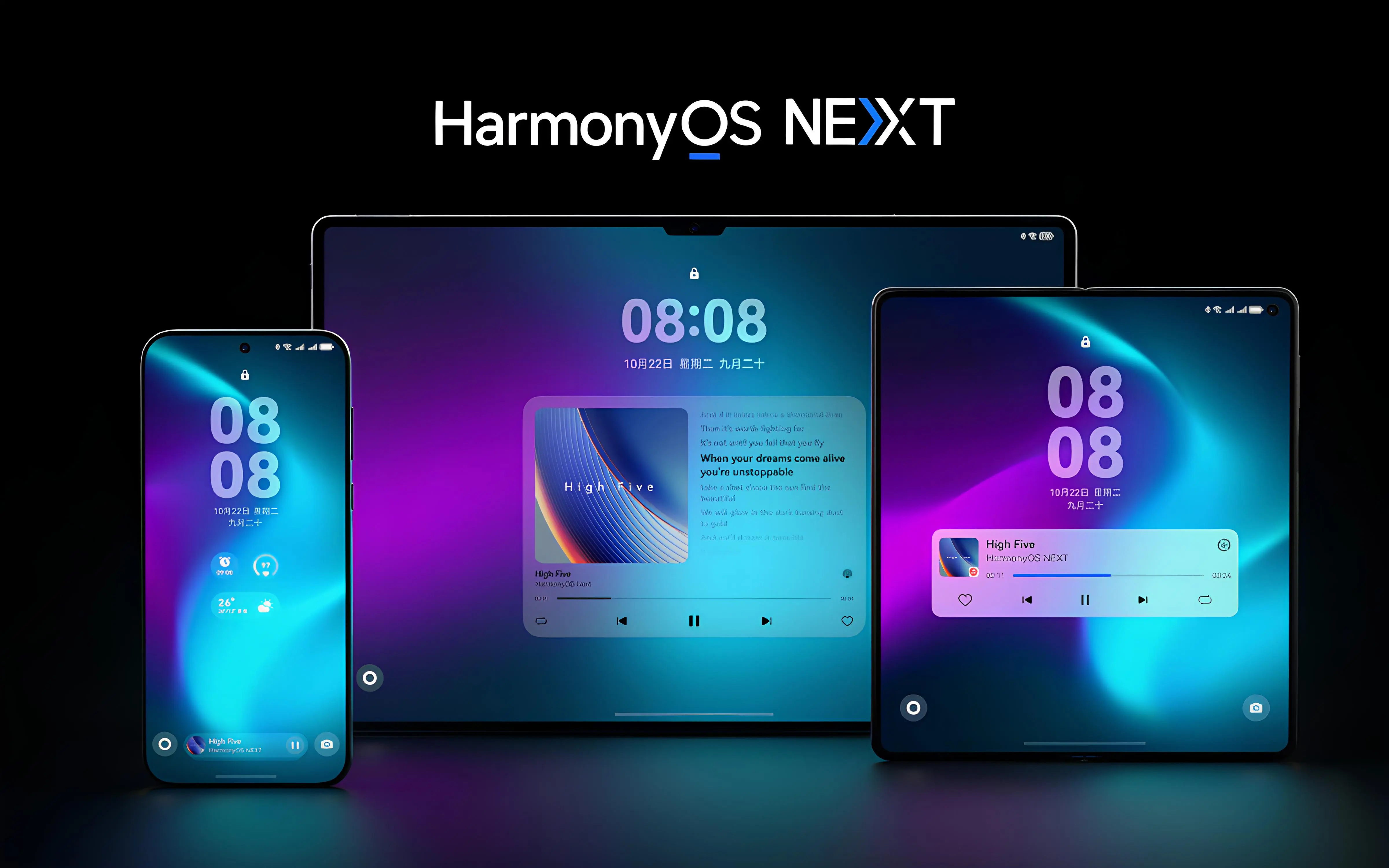
The Asian giant Huawei has achieved what neither Android, Microsoft, nor Amazon have been able to: its own ecosystem capable of competing with Apple. That word, so often repeated by the Cupertino company, is now a reality in HarmonyOS . Trump’s lockdown has helped Huawei venture out on its own, offering an interesting fork of Android that goes far beyond the basics.
Huawei can now compete with Google and Microsoft
In record time, we’ve gone from seeing Huawei without Google services to witnessing HarmonyOS take off and offer an incredible ecosystem with great accessories and even better ideas. The impression Huawei has left us with is clear: we want to try more devices from the Chinese brand, and we believe, without a doubt, that it can compete with Android and Windows .
Huawei is free from US influence, and this is very dangerous for the American giant. The United States has always been the reflection and epicenter of global technology. If Huawei manages to gain a foothold in more countries, it could significantly reduce the West’s technological dependence on American companies.
HarmonyOS: a mature and ambitious operating system
The fact is, HarmonyOS works wonderfully . It needs some polishing and a better user experience, but they already have the same operating system running on all their devices: from smartphones to tablets, wearables, computers, and smart appliances.
True cross-platform integration
Unlike Microsoft’s failed attempts with Windows Phone or Amazon’s with Fire OS, Huawei has built something different. HarmonyOS is not just a mobile operating system; it’s a unified platform that connects all of the company’s hardware seamlessly and naturally.
Device synchronization is seamless. Transferring a call from your phone to your tablet, sharing files instantly, or using your computer as an extension of your smartphone feel natural, not forced, in HarmonyOS.
The ecosystem Apple should fear
Where Apple has spent years perfecting its closed ecosystem, Huawei has taken just three years to create something comparable. And it has done so starting virtually from scratch, without access to Google Play Services or the most popular Western development tools.
AppGallery: the viable alternative
Huawei’s app store, AppGallery , has grown exponentially. While it still lacks some popular apps in the West, in markets like China, Asia, and increasingly in Europe, it offers the essential apps that the average user needs.
Developers are paying attention. Seeing that Huawei has sold millions of devices in China alone is making them reconsider whether porting their apps is worth the effort.
Will other manufacturers join HarmonyOS?
We are convinced that, over time, Huawei could even attract a manufacturer to become a HarmonyOS partner . The idea is not far-fetched:
- Less reliance on Google : some Chinese manufacturers might see HarmonyOS as a strategic alternative
- Competitive licensing costs : Huawei could offer very attractive terms
- Access to the Chinese market : Aligning with HarmonyOS facilitates entry into the world’s largest market
- Accelerated innovation : joint development could drive faster improvements
Brands like Xiaomi, OPPO, or vivo, although currently committed to Android, could consider HarmonyOS as a plan B if geopolitical tensions escalate.
The challenges Huawei still faces
It’s not all sunshine and roses. HarmonyOS still faces significant challenges :
- Penetration into Western markets : sanctions remain in place in the United States
- Brand perception : overcoming concerns about privacy and security
- Application catalog : convincing Western developers to invest resources
- Hardware components : restrictions on advanced semiconductors limit their competitiveness in the high-end market
The trust factor
In Europe and the United States, many users still distrust Chinese services. Huawei needs to build trust through transparency, independent audits, and consistent results.
A new player on the technology chessboard
Huawei has demonstrated that it’s possible to create a complete and independent technology ecosystem in record time. HarmonyOS is not just an Android clone or a failed experiment like so many others. It’s a mature, functional, and forward-thinking platform.
Apple’s ecosystem monopoly now faces real competition. And most importantly, that competition isn’t coming from Silicon Valley, but from Shenzhen. The tech world has changed, and dependence on the United States is no longer inevitable .
The question now is not whether HarmonyOS can survive, but how far it can go. We’ll see if they might venture into virtual reality or augmented reality in the future.