

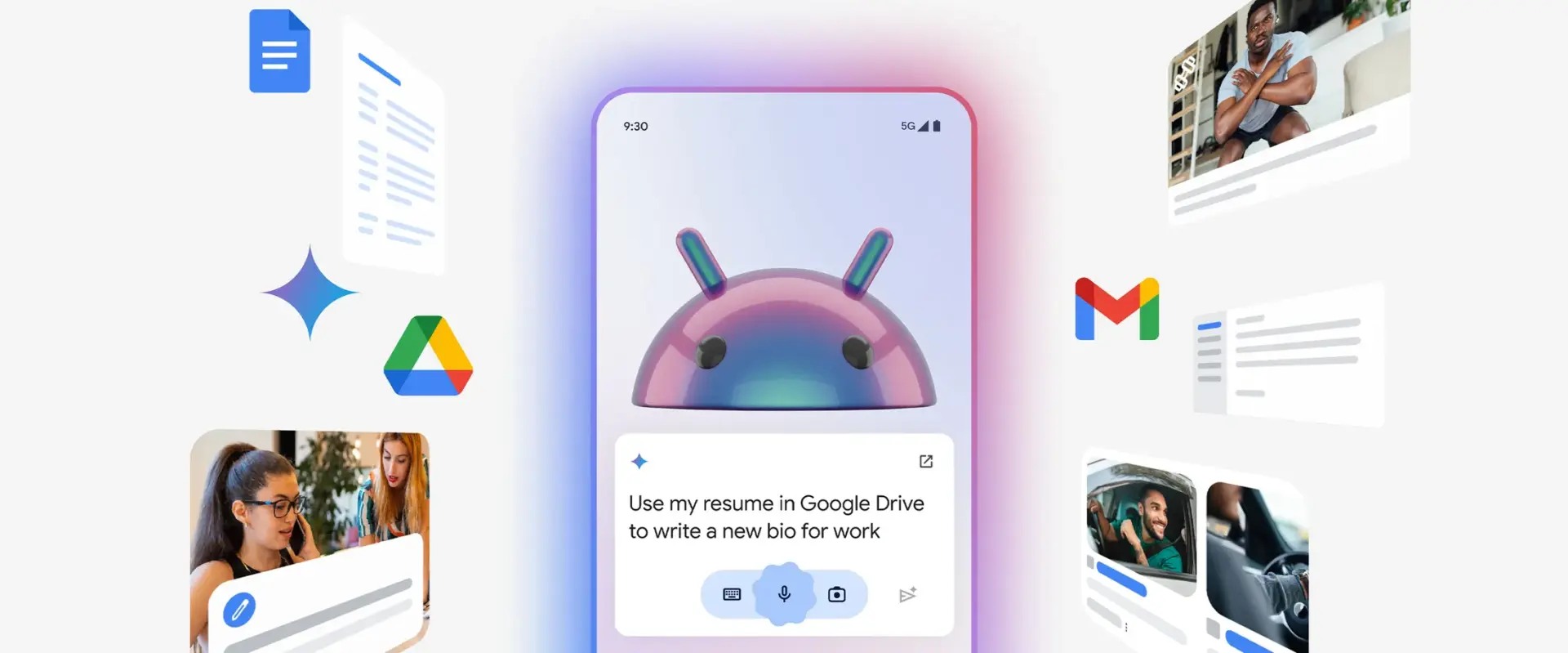
It’s fascinating to see how virtual assistants have evolved, or rather, devolved. At first, they seemed like a revolution that would help us in our daily lives, but in the long run, they became little more than an advanced search engine with basic tasks. In Google’s case, we’ve gone through many stages: it all started with Google Now, followed shortly after by Google Assistant (2016) with the ambition of understanding us better than we understand ourselves… and now, generative AI aims to make that ambition a habit, although it still has a long way to go to prove itself.
As always, there’s a catch: Artificial Intelligence is becoming increasingly complex with different models, manufacturer layers, and so on. Google’s idea is very interesting, but it still needs to be implemented.
Google confirms that Gemini will completely replace Google Assistant in 2026
The Mountain View giant has already confirmed it: it has a plan to upgrade Assistant to Gemini , and this won’t end in 2025 as hinted at months ago. The transition will continue «within 2026» to ensure a seamless and transparent change for the user. In other words, Assistant will remain with us, but the transition will be smooth and not forced.
However, there will be no coexistence; the idea is that Google Assistant will no longer be available on phones and tablets that meet the requirements to run Gemini. The change will be abrupt, and Assistant will no longer be available for download. The goal is for Gemini to replace Assistant, rendering the latter obsolete forever.
As we’ve already mentioned, Assistant was a command-based assistant: useful, fast, and with the charm of someone who doesn’t try to write a novel when you ask them for a timer. Gemini, on the other hand, is completely different. It was created with the aim of being a conversational assistant with reasoning capabilities , able to piece together context, understand intent, and, above all, «get involved» (with permissions) in what happens within your apps. It’s a more complex and advanced approach that could help us get the most out of our device.
Digital Trends is clear on this point: this represents a paradigm shift. It’s not just a name change, it’s a change in philosophy. It involves embracing and integrating AI into Android, making it our new assistant with much more to offer.
The transition isn’t just Android
9to5Google adds a key piece of information: when the move is complete, Assistant will also disappear as a standalone app on iOS . Meanwhile, Google is already rolling out Gemini to more platforms (Wear OS, Android Auto, etc.), like someone setting up the stage before the curtain falls on the main actor.
Gemini will be everywhere, and Assistant is destined for the digital graveyard. Google is clear that AI is the present and the future, and they won’t hesitate to definitively eliminate Assistant and evolve it into Gemini. Furthermore, these millions of users will improve Gemini’s future and ensure its continued evolution.
In 2025, Google has already been enabling Assistant-like features (calls, timers, messages) from Gemini without forcing you to activate Gemini Apps Activity , a setting related to activity logging that can also affect data usage for improving models.
If your routine is «set alarm,» «turn on lights,» «call X,» breathe easy: Assistant will still be available during the transition . You’re not going to wake up one day and find Gemini occupying the house like a squatter with a PhD.
If you’re into the assistant wars (and want alternatives)
Google’s move comes at an interesting time: other assistants are also vying for their place. For example, Microsoft even allowed Copilot as the default assistant on Android .